Keynote # 1: Autonomous System Design (ASD) Keynote
Tuesday, May 12, 2026, 10:30 – 11:45 AM, Rotonde J. Cartier
Title: The Sovereignty Paradox – Safe AI for Aerospace Autonomous Systems
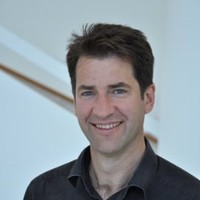
Speaker: Oliver Rogalla, Airbus Defense and Space.
Abstract:
The rapid evolution of AI in modern conflict has created an urgent need for “Software-Defined” defense platforms. However, unlike the consumer AI sector, Aerospace & Defense operates under a unique constraint: The Sovereignty Paradox. While the success of AI depends on massive, diverse datasets, the most valuable defense data is fragmented across national authorities and protected by strict confidentiality and export control laws.
This presentation invites the research community to address the dual challenge of Safe AI and Confidential Intelligence. We explore why traditional “Centralized Training” models fail in the defense ecosystem and propose a shift toward Privacy-Preserving Methods and solutions. By leveraging Federated Learning, Synthetic Data generation, and Formal Verification, we can bridge the gap between proven safety and the need for rapid, data-driven evolution. We challenge the scientific community to help us to build a “Safe Sovereign Intelligence Architecture” that learns from data it can never see.
Speaker Biography
Dr. Oliver Rogalla is the Head of Engineering for AI and Autonomous Systems at Airbus Defence and Space Airpower, where he leads the transformation of aviation platforms into software-defined assets. With a background in Autonomous Driving at Bosch and a PhD in Machine Learning and Robotics from KIT, he bridges the gap between high-reliability engineering and AI. His work focuses on overcoming the “Sovereignty Paradox” by developing Safe, Confidential AI for the next generation of European defense ecosystems.
Keynote # 2: Foundations Keynote
Wednesday May 13, 2026, 10:30 – 11:45 AM, Rotonde J. Cartier
Title: Sample-Based Safety-Critical Decision Making

Speaker: Raphael Jungers, Universite Catholique Louvain, Belgium.
Abstract: Making risk-aware decisions under uncertainty is a central challenge in engineering applications. Traditionally, this problem has been addressed through model-based approaches, where decisions are evaluated against a prescribed model using tools such as Monte Carlo simulation or Lyapunov analysis. However, the increasing complexity of modern systems (think of a hybrid stochastic automaton), the abundance of data, and the often unknown nature of uncertainty call for approaches that rely less on explicit modeling and more directly on data.
Scenario-based decision making offers a compelling framework in this direction. It enables risk-aware decisions based solely on the sampled realizations of uncertainty, without requiring an explicit model. Despite its conceptual simplicity, this setting exhibits a rich mathematical structure, with deep theoretical results as well as significant open challenges, while remaining highly effective in practice.
In this talk, I will present the mathematical foundations of sample-based decision making, spanning the scenario approach, conformal prediction, and PAC learning. I will then discuss the most recent advances that provide finite-sample, distribution-free guarantees on the risk of decisions based solely on the algorithm used and the observed data. Finally, I will introduce a novel paradigm leveraging these ideas for the exploration-exploitation tradeoff in safety-critical Model Predictive Control.
Speaker Biography
Raphael Jungers is a Professor at UCLouvain, Belgium. His main interests lie in the fields of Computer Science, AI and Control. He received a Ph.D. in Mathematical Engineering from UCLouvain (2008), and a M.Sc. in Applied Mathematics, both from the Ecole Centrale Paris, (2004), and from UCLouvain (2005).
He has held various invited positions, at the Université Libre de Bruxelles (2008-2009), at the Laboratory for Information and Decision Systems of the Massachusetts Institute of Technology (2009-2010), at the University of L´Aquila (2011, 2013, 2016), at the University of California Los Angeles (2016-2017), and at Oxford University (2022 2023). He has been serving as Vice President of IEEE CSS, in charge of Conference Activities (2026-2027).
He is a FNRS, BAEF, and Fulbright fellow. He has been an Editor at large for the IEEE CDC, Associate Editor for the IEEE CSS Conference Editorial Board, and the journals NAHS (2015-2016), Systems and Control Letters (2016-2017), IEEE Transactions on Automatic Control (2015-2020), Automatica (2020-2025). He is currently serving as deputy Editor in Chief for NAHS. He was the recipient of the IBM Belgium 2009 award and a finalist of the ERCIM Cor Baayen award 2011. He was the co-recipient of the SICON best paper award 2013-2014, the HSCC2020 best paper award, the NAHS 2020-2022 best paper award, and he is the recipient of an ERC 2019 award. He is an IEEE Fellow (class 2025).
Keynote # 3: Systems and Applications Keynote
Thursday May 14, 2026, 10:30 – 11:45 AM, Rotonde J. Cartier
Title: Deep Brain Stimulation: What’s in it for us?
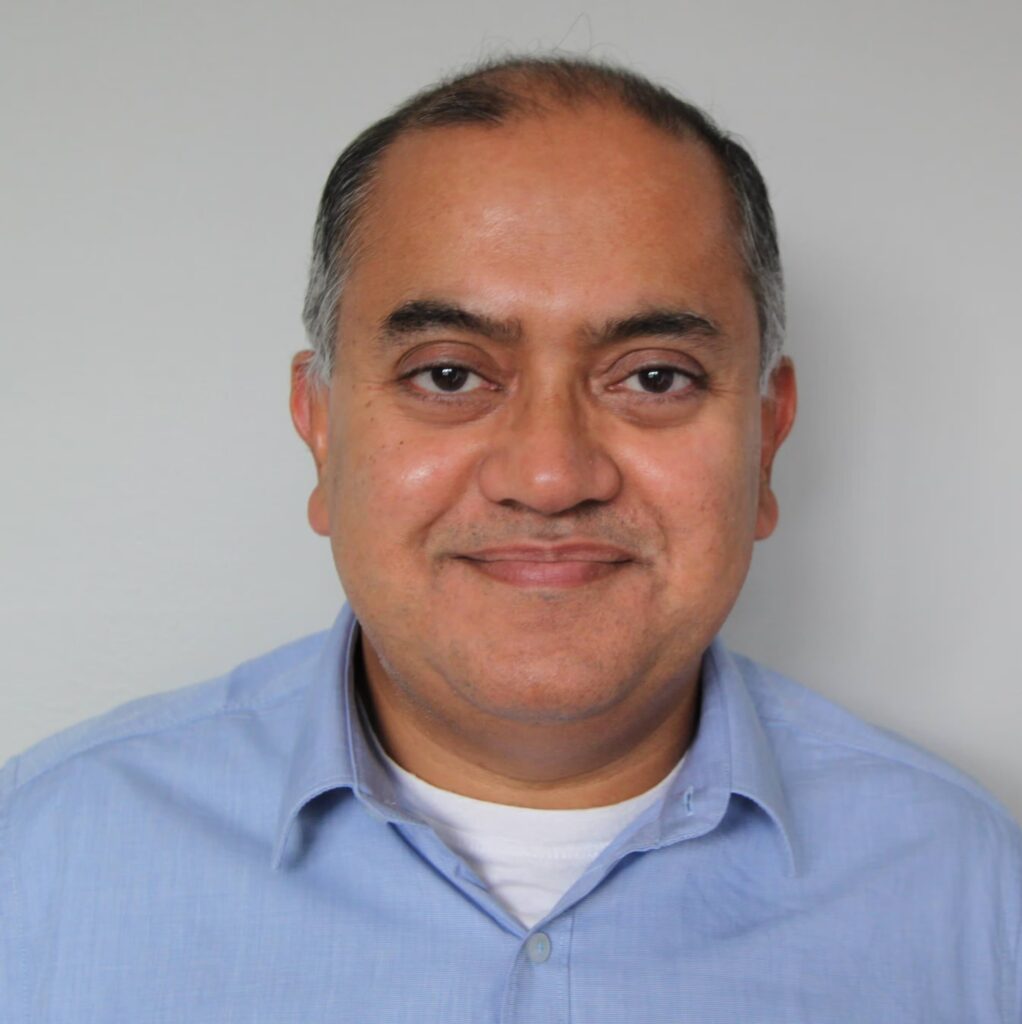
Speaker: Samarjit Chakraborty, University of North Carolina, Chapel Hill, USA.
Abstract: Deep Brain Stimulation (DBS) has been shown to be an effective treatment for Parkinson’s Disease and is starting to be used to treat essential tremor, epilepsy, obsessive compulsive disorder and certain types of depression. DBS provides electrical stimuli to specific regions of the patient’s brain through surgically implanted electrodes that are wired to a pulse generator, also implanted inside the patient. While almost 10,000 DBS surgeries are already performed in the U.S. alone every year, research is actively being done to improve this technology. These include determining better electrode configurations and optimizing stimulation parameters by adjusting the pulse’s shape, amplitude, and frequency. Such parameters can either remain static and be manually adjusted by a neurologist, or use closed-loop feedback control that monitor neural data-based biomarkers to adjust the stimulation. Such adaptive approaches can not only lead to better patient outcomes as the condition of the patient evolves, but also reduce undesirable side effects and prolong the device’s battery life. This talk will provide a tutorial introduction to DBS, covering its history, clinical foundations, and emerging adaptive strategies. We will see that DBS is a compelling cyber-physical systems problem, involving questions in optimal control, reinforcement learning, formal verification, and resource & power-aware embedded systems design.
Speaker Biography
Samarjit Chakraborty is Kenan Distinguished Professor of Computer Science and an adjunct professor of Mathematics at the University of North Carolina at Chapel Hill. Before joining UNC, he was Professor of Electrical Engineering at the Technical University of Munich, where he held the Chair of Real-Time Computer Systems, and earlier served on the faculty of the National University of Singapore. He received his PhD from ETH Zurich. His research spans embedded and cyber-physical systems, sustainable computing, and sensor-networked information processing. His work has received several best paper awards and other recognitions. He is an IEEE Fellow, an ACM Distinguished Speaker, a Fellow of the TUM Institute of Advanced Study, and is currently the elected chair of ACM SIGBED, the ACM’s Special Interest Group on Embedded Systems.
More information: https://cs.unc.edu/person/samarjit-chakraborty